Complete Backpacking Gear Guide: Categories, Weight, and Mistakes to Avoid
Short answer: A backpacking gear list breaks down into five core categories: shelter, sleep system, backpack, clothing, and cook and safety gear. Aim for a total pack weight under 20% of your body weight, or around 25 to 30 lbs for a beginner weekend trip. This guide covers every category, the 10 essentials, and how to hit your target base weight.
What are the 10 essentials for a backpacking trip?
The 10 essentials are the safety foundation of any backpacking gear list, developed by The Mountaineers in the 1930s and still used today. Every trip should cover these ten categories, from a quick day hike to a weeklong route.
|
Essential |
Examples |
|
Navigation |
Map, compass, GPS device |
|
Sun protection |
Hat, sunglasses, sunscreen, lip balm |
|
Insulation |
Extra layer, insulated jacket |
|
Illumination |
Headlamp, extra batteries |
|
First aid kit |
Blister kit, medications, bandages |
|
Fire |
Waterproof matches, lighter |
|
Repair kit and tools |
Multi-tool, camp knife, duct tape |
|
Nutrition |
Extra food, backpacking snacks |
|
Hydration |
Water bottle, filter, hydration bladder |
|
Emergency shelter |
Bivy, space blanket, tarp |
What are the main categories on a backpacking gear list?
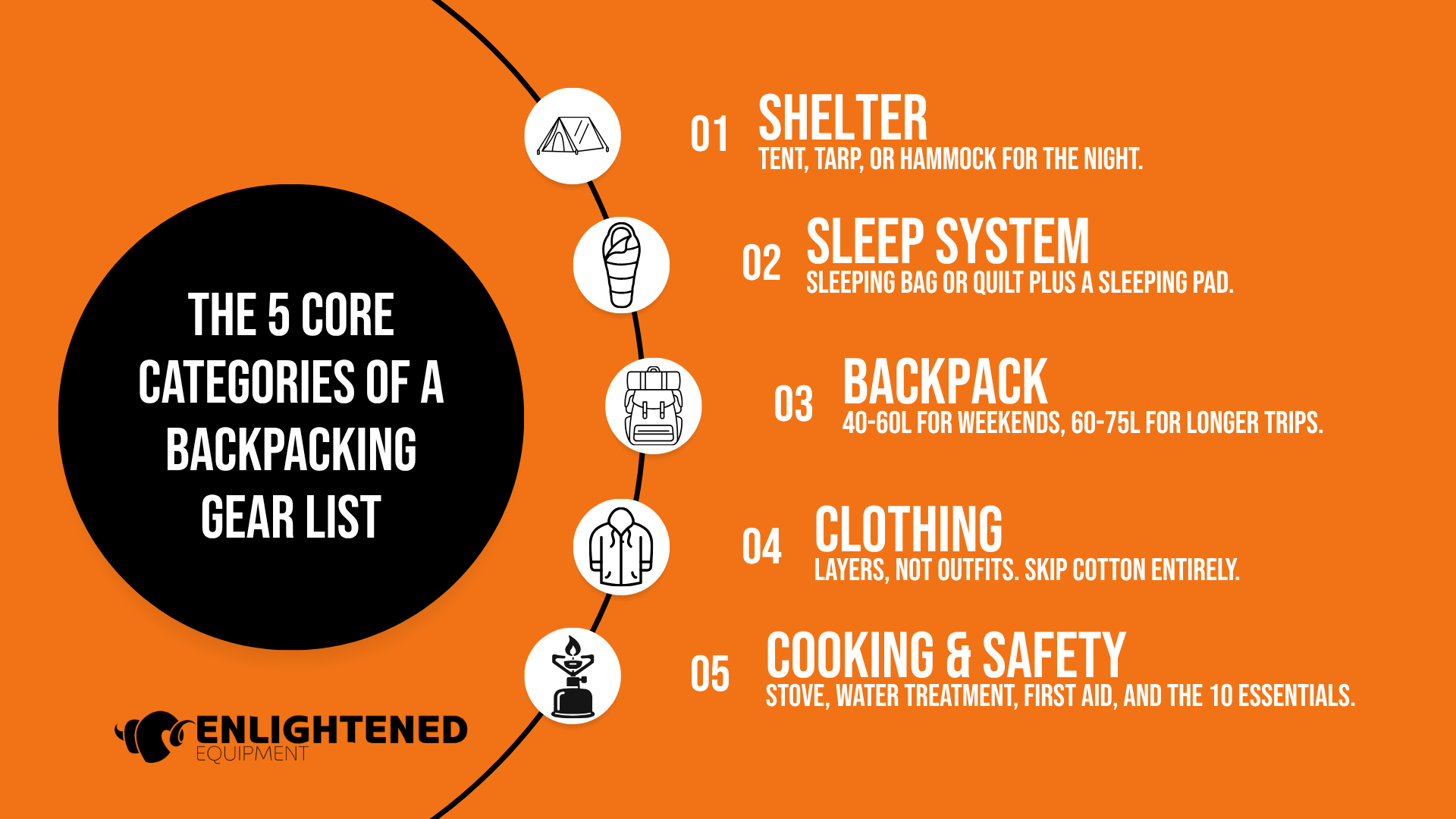
A full backpacking gear list covers seven categories beyond the 10 essentials. Each category has a specific job in your pack.
What shelter do I need for backpacking?
Your shelter options include a tent, tarp, or hammock. Ultralight tents pitched with trekking poles instead of dedicated tent poles cut weight for solo trips, while a two-person backpack tent is more efficient when shared between hikers. A tent footprint adds durability but adds weight, so many ultralight backpackers skip it.
What goes in a backpacking sleep system?
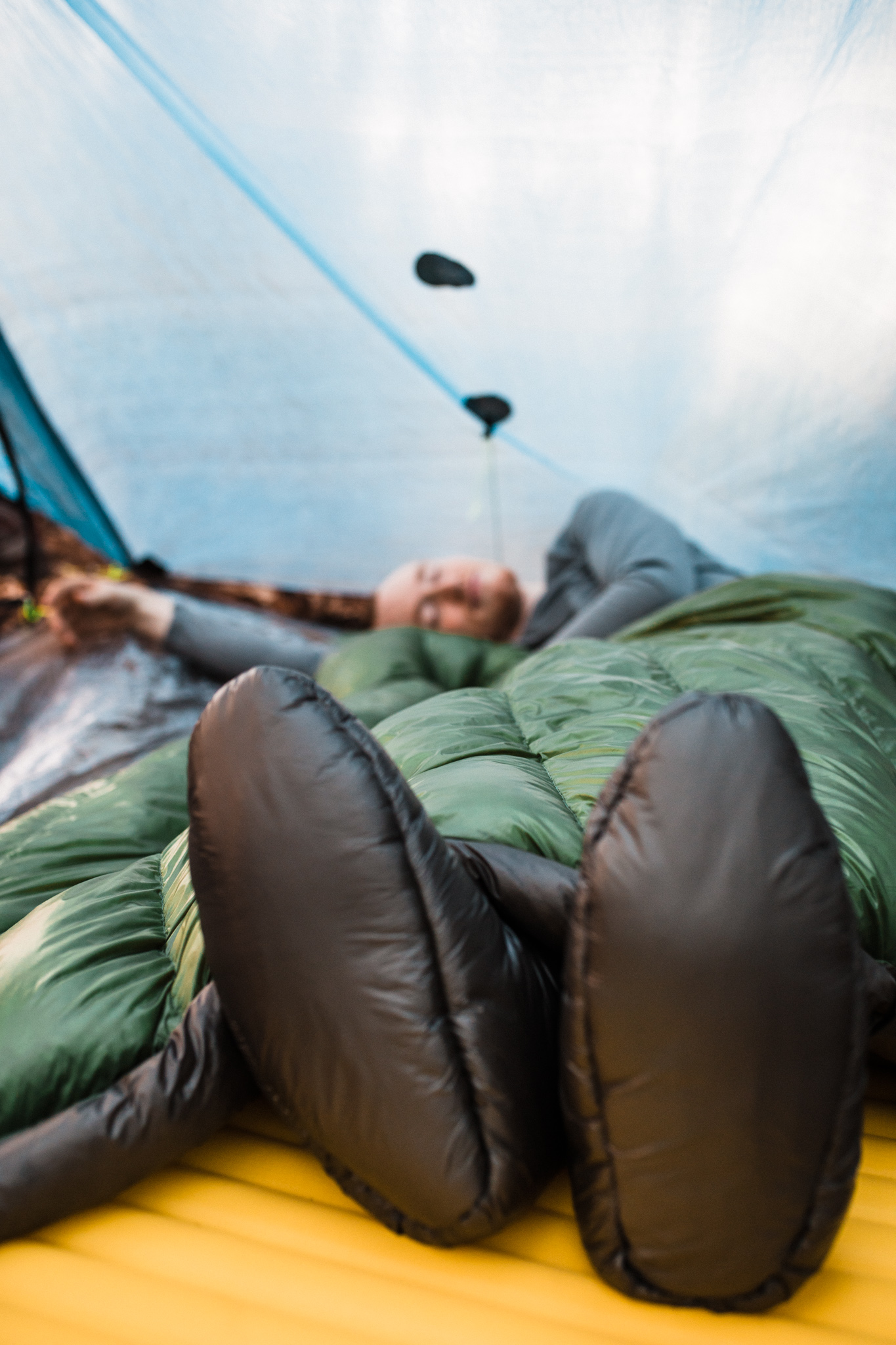
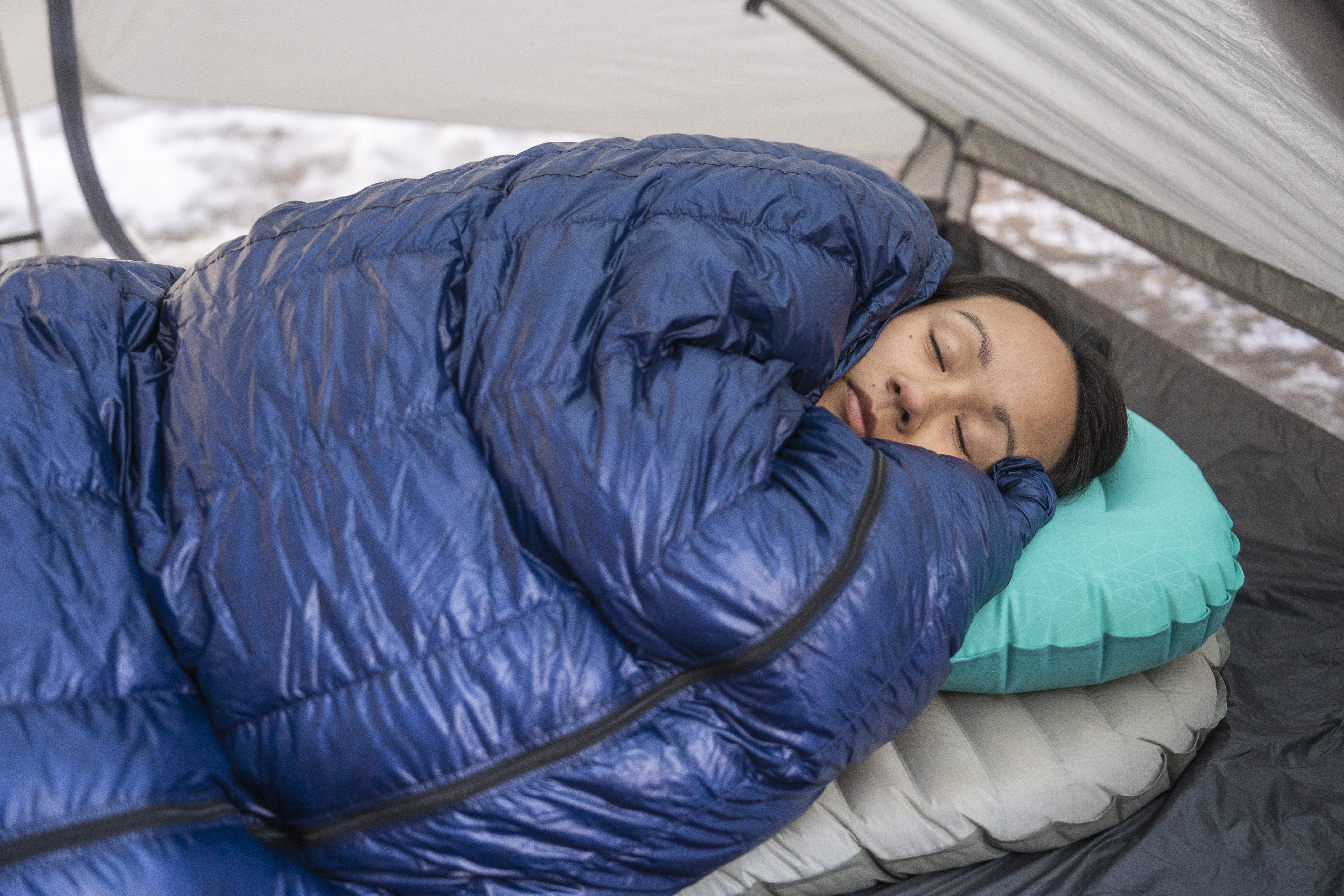
A sleep system includes a sleeping bag or lightweight quilt, a sleeping pad, and a backpacking pillow or clothes bundle. A backpacking quilt weighs less than a comparable sleeping bag at the same temperature rating because it removes the bottom insulation your body would compress anyway. Pair it with an insulated sleeping pad rated for the season for a complete sleep system.
What size backpack do I need for backpacking?
A 40 to 60L backpack covers most weekend trips. Longer trips or bulkier winter gear may call for 60 to 75L. Fit matters more than volume, so a lightweight backpacking backpack should ride on your hips, not your shoulders, and give you easy access to what you use most. Add a backpack rain cover, dry sack, or waterproof stuff sack for wet weather.
What clothing should I bring backpacking?
Pack layers, not outfits. Bring a base layer, an insulating midlayer, rain gear like a rain jacket or wind jacket, hiking pants, hiking shorts, extra socks, and a hiking hat. Skip cotton entirely, since it holds moisture and pulls heat from your body. Merino wool and synthetic fabrics dry faster and regulate temperature better.
What cooking gear do I need for backpacking?
A basic backpacking cookware kit includes a stove, fuel canister, cook pot, camping bowl or mug, and backpacking utensils. Freeze-dried meals and dehydrated meals cook quickly with hot water and take up little space. Add a food storage bag or bear canister where required.
Do I need a bear canister for backpacking?
Yes, if you're camping in bear country or on trails that require them, like the John Muir Trail or Pacific Crest Trail. Always check local regulations before your trip.
How do I treat water on a backpacking trip?
Turn dirty water into clean water with a filter like the Sawyer Squeeze, chemical treatment, or UV purification. A hydration bladder or water bottle keeps drinking easy on the trail. Always know your water source spacing before you head out.
What safety and navigation gear should I bring?
Beyond the 10 essentials, bring a satellite messenger or personal locator beacon for emergency communication in areas without cell service.
How do I organize my backpacking gear list?
Group items by category (shelter, sleep system, cooking, and so on) and check them off before every trip. A printed or digital checklist prevents forgotten essentials and helps you refine your gear list over time.
How much should my backpacking gear weigh?
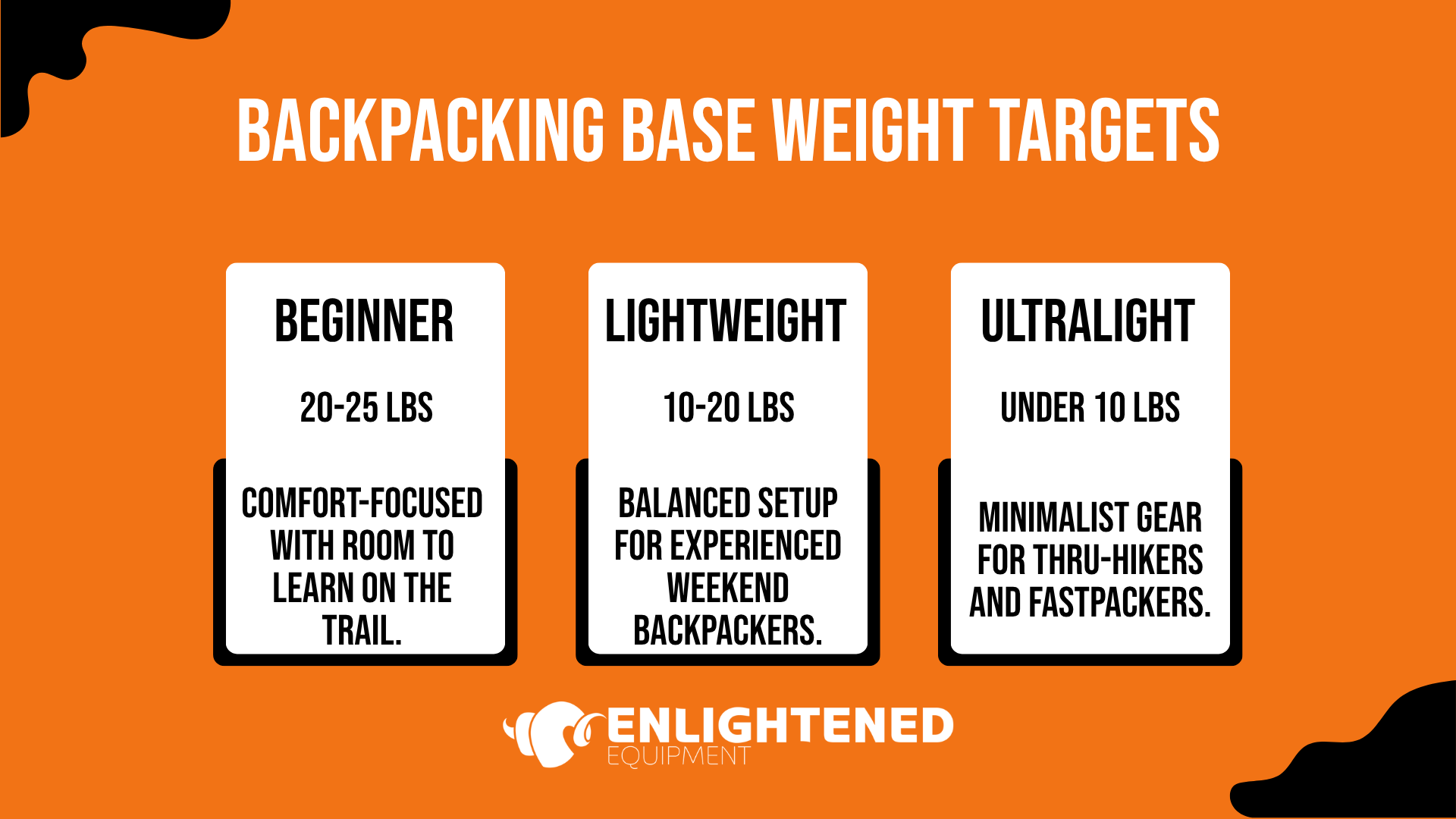
Weight targets change based on experience and trip length, but every backpacker should know their base weight.
What is the difference between a beginner and ultralight backpacking gear list?
A beginner list prioritizes comfort and cost. An ultralight backpacking gear list prioritizes weight, often targeting a base weight under 10 lbs. Both cover the same core categories.
What is base weight in backpacking?
Base weight is the total weight of your pack minus food, water, and fuel, which are called "consumables." An ultralight backpacking gear list targets a base weight under 10 lbs. Beginners typically start at 20 to 25 lbs of base weight.
What is a good pack weight for beginners?
A beginner's total pack weight should stay under 25 to 30 lbs, or roughly 20% of body weight. Lighter is always more comfortable on the trail, but experience helps you know what you actually need.
How can I cut weight from my backpacking gear list?
Start with your "big three": shelter, backpack, and sleep system. The sleep system usually offers the biggest single weight cut. Swapping a heavy sleeping bag for a backpacking quilt and pairing it with an insulated sleeping pad can save one to two pounds without giving up warmth. Bringing less gear beats buying lighter gear every time.
How much does a backpacking gear setup cost?
A beginner backpacking gear setup starts around $500 to $800. An ultralight setup with high-end lightweight gear can exceed $2,000.
Your Sleep System is the Biggest Weight-cutting Opportunity
The sleep system is where most backpackers carry unnecessary weight. A traditional mummy sleeping bag rated for 20°F weighs about 2.5 lbs. A backpacking quilt at the same temperature rating can weigh under 1.5 lbs because it doesn't include compressed insulation under your body. Pair a lightweight quilt with a compact sleeping pad and you've built one of the lightest possible sleep systems without sacrificing warmth in cold weather or colder temperatures.
Build a lighter backpacking gear list with Enlightened Equipment
Your sleep system is the fastest way to bring your base weight down without giving up warmth or comfort. At Enlightened Equipment, our quilts are handmade in the USA and independently temperature-tested for accurate performance. Browse our down quilts by temperature to find the right rating for your trip, and pair it with the right sleeping pad to complete a lighter, warmer sleep system.
Common backpacking gear list mistakes to avoid
Even experienced backpackers make these mistakes. Learning to spot them saves both pack weight and trail comfort.
- Overpacking "just in case" items: Every extra item adds weight you'll regret by mile three.
- Bringing cotton clothing: Cotton holds sweat and rain, which cools your body dangerously in cold weather.
- Not weighing your pack: If you don't weigh it, you can't cut it.
- Skipping the sleep system upgrade: The biggest weight cut sits in your sleep system.
- Forgetting the 10 essentials: Skipping any of the ten categories puts you at real risk.
- Buying gear you haven't tested: A tent you can't pitch or a stove you've never lit fails when it matters.
- Ignoring your feet: The wrong socks or shoes ruin a trip faster than any other gear failure.