Down vs Synthetic Sleeping Bag/Quilt: Which Is Better for Backpacking?
The Short Answer: When comparing a down vs synthetic sleeping bag/quilt, the main difference comes down to performance in weight, warmth, and moisture. Down insulation offers the best warmth-to-weight ratio and compressibility, making it ideal for cold, dry conditions and long-distance backpacking, while synthetic insulation provides more reliable performance in damp environments where moisture is a concern. The right choice depends on your climate, trip length, and overall sleep system.
One of the most common questions we get about our sleeping quilts is the difference between our down and synthetic insulation options. While both are designed to keep you warm and comfortable on the trail, they perform differently depending on moisture, temperature, and overall sleep system setup. Understanding how each insulation type works can help you choose the right option for your backpacking style, trip conditions, and long-term gear performance.
Down vs Synthetic Sleeping Bag/Quilt: Understanding the Main Difference
When choosing between a down sleeping bag and a synthetic sleeping bag, you are really choosing between two different insulation systems. Both trap body heat, but perform very differently in real backpacking conditions.
What Is Down Insulation?
Down insulation comes from the soft under-feathers of ducks or geese and is widely known for its exceptional warmth-to-weight performance. Instead of using solid fibers, down clusters trap heat by creating tiny air pockets that hold warmth efficiently while remaining extremely lightweight.
Down sleeping bags and quilts are typically available as goose down sleep quilts or duck down sleeping quilts, and are often measured by fill power, which indicates how much loft and insulating ability the down provides. Higher fill power means better insulation with less weight, making down a top choice for ultralight backpacking and colder conditions.
What Is Synthetic Insulation?
Synthetic insulation is made from engineered fibers designed to mimic the insulating properties of down. These fibers trap heat in a similar way, but they are less compressible and generally heavier compared to down insulation. These synthetic fibers are designed to maintain insulating properties even when exposed to moisture, making synthetic fill a reliable option in wet conditions.
A synthetic sleeping bag (or quilt) is commonly preferred in wet or humid environments because it continues to retain warmth even when exposed to moisture. While it may not match the packability or weight savings of down, synthetic insulation provides more consistent performance in unpredictable weather conditions.
How Do They Perform in a Sleep System
The choice between down and synthetic insulation does not stand alone. It plays a key role in how your entire backpacking sleep system performs on the trail.
Down insulation works best in systems where keeping gear dry is manageable, allowing you to take full advantage of its lightweight and compressible nature. Synthetic insulation, on the other hand, adds reliability in environments where moisture, condensation, or extended exposure to damp conditions could impact performance.
Understanding how insulation works within your sleep system is key to choosing the right option.
Down vs Synthetic Sleeping Bag/Quilt Performance
Warmth-to-Weight and Packability
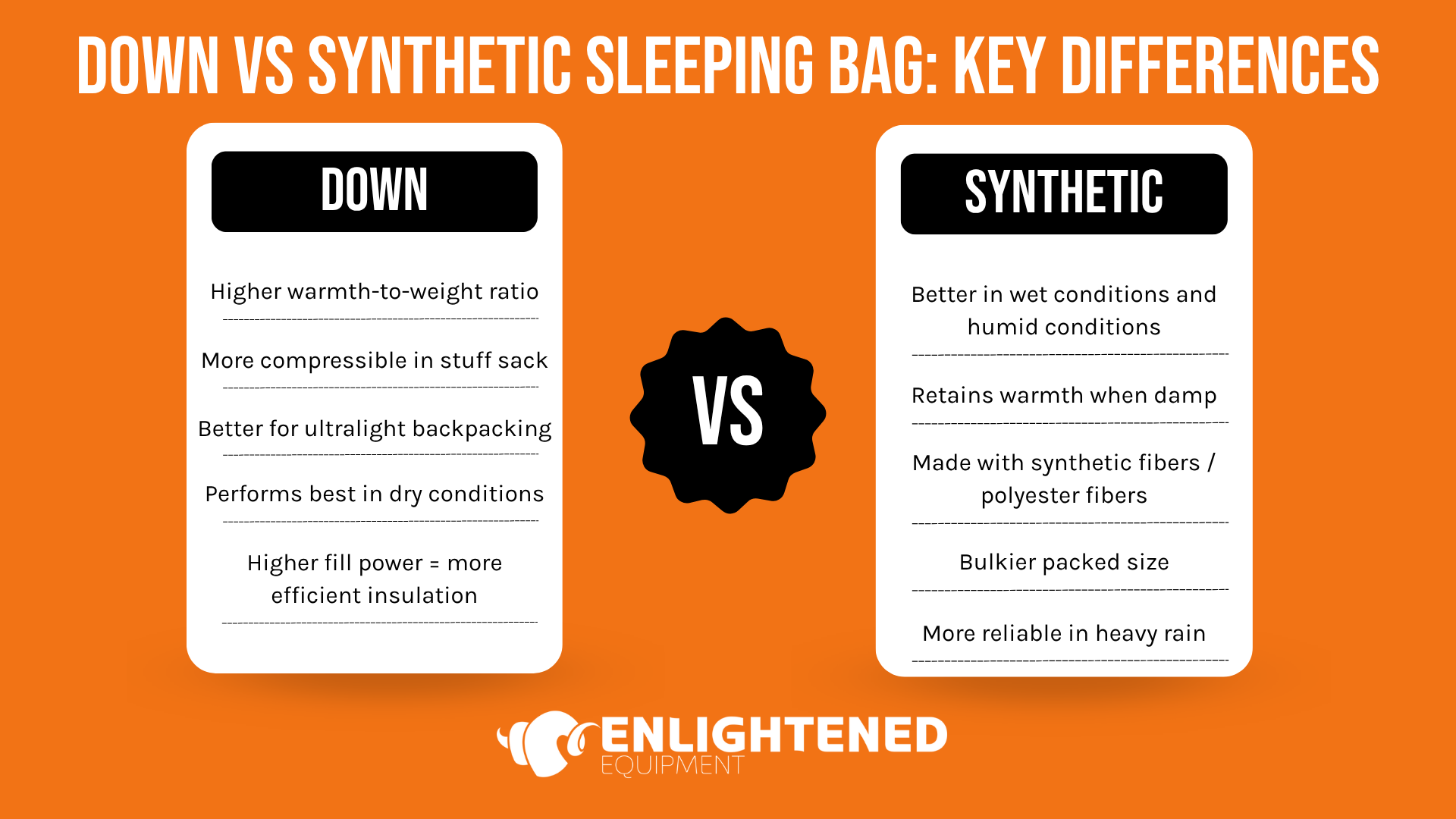
One of the biggest advantages of a down sleeping bags and quilts is its ability to deliver maximum warmth with minimal weight. Down insulation compresses easily into a small stuff sack, making it ideal for backpackers who want to reduce pack weight and save space.
Synthetic sleeping bags and quilts, while still effective, tend to be bulkier and heavier due to the nature of their insulation fibers. This matters less on short trips but becomes noticeable over long distances.
Moisture Resistance and Wet Weather Performance
Synthetic insulation performs better in damp conditions, humid conditions, or heavy rain because it retains warmth even when exposed to moisture. This makes a synthetic sleeping bag/sleeping quilt a dependable option for humid climates, rainy environments, or trips where keeping gear dry may be difficult.
Down insulation, while highly efficient, can lose its ability to trap heat if it becomes saturated. However, many modern down sleeping bags/sleeping quilts use treated down and improved shell fabrics to help manage moisture and extend performance in variable conditions.
Cold Weather and Temperature Ratings
Both down and synthetic are available across a wide range of temperature ratings, including options designed for extreme cold such as 0 degree down sleeping bags/quilts. Down insulation is often preferred for cold weather backpacking because it provides more warmth for less weight, making it easier to carry on longer trips.
Synthetic insulation can still perform well in colder conditions, especially when moisture is a factor, but it may require additional bulk to achieve the same level of warmth as down.
Goose Down vs Duck Down Sleeping Bags
When comparing goose down to duck down, the primary difference is fill power and overall insulation quality rather than the bird itself. Both types of down insulation trap body heat using clusters that create insulating air pockets, delivering strong warmth-to-weight performance. Fill power, measured in cubic inches, shows how much space one ounce of down can occupy, with higher fill power providing better loft and insulating properties.
High quality goose down is often linked to higher fill power, but modern duck down sleeping bags/quilts can offer similar performance depending on processing and sourcing. For ultralight backpacking and minimizing pack weight, a high fill power down sleeping bag/quilt improves compressibility and reduces gear volume in a stuff sack, helping highlight real-world performance differences between insulation types.
Down vs Synthetic: Pros and Cons
Understanding the tradeoffs between down insulation and synthetic insulation can help you choose the right option based on your specific needs and trip conditions.
| Feature | Down Sleeping Bag/Quilt | Synthetic Sleeping Bag/Quilt |
|---|---|---|
| Warmth-to-Weight Ratio | Excellent for ultralight backpacking | Lower efficiency |
| Packability | Compresses smaller in a stuff sack | Bulkier packed size |
| Insulation Performance | High quality down provides strong insulating properties | Made from synthetic fibers that retain warmth when damp |
| Weather Performance | Best in cold, dry conditions | Performs well in wet conditions and humid conditions |
| Moisture Resistance | Can lose insulation when wet | Retains warmth in damp conditions and heavy rain |
| Durability & Care | Requires proper care to maintain loft | More durable and easier to maintain |
| Cost | Typically higher cost | Generally more affordable |
Down vs Synthetic Sleeping Bags/Quilts: Which is Best for Ultralight Backpacking?
For hikers focused on ultralight backpacking, insulation choice plays a major role in overall pack weight and efficiency on trail. A down sleeping bag, often called a down bag, is typically the preferred option because it delivers maximum warmth with minimal weight while compressing into a smaller packed size.
Synthetic sleeping systems can still be useful in environments where moisture is unavoidable, but they often require more space and add extra weight over long distances. For thru hikers and long-distance backpackers, even small differences in pack weight can impact endurance and comfort over time.
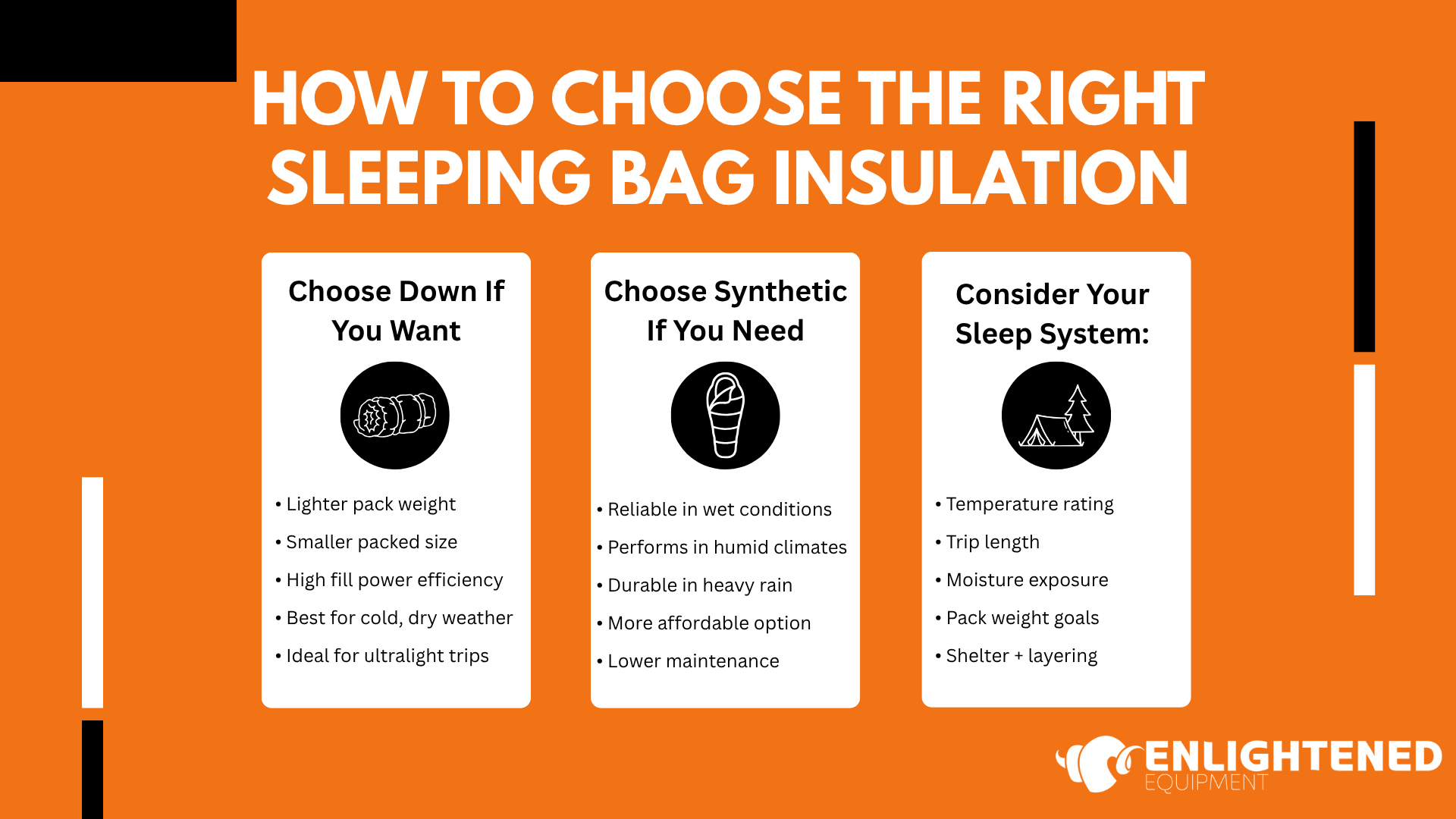
Choosing the right insulation type ultimately depends on balancing weight, moisture exposure, and performance needs within your full sleep system.
Additional Considerations for Down vs Synthetic
Beyond insulation type, a few additional factors influence how a down sleeping bag or synthetic sleeping bag performs in real-world conditions. The outer shell plays a key role in durability and water resistance, with lightweight fabrics and coatings improving performance in damp conditions, light rain, and high ambient humidity, though proper storage like a pack liner is still needed to keep gear dry.
Some backpackers use a sleeping bag liner to add extra warmth, improve cleanliness, and extend the lifespan of a down bag or synthetic bag, especially on long trips. Synthetic fill, made from synthetic fibers or polyester fibers, is designed to replicate insulating properties while maintaining performance in wet conditions, making synthetic material a strong choice for humid conditions and heavy rain. Fit and design also matter, with some hikers preferring extra space and others choosing a fitted degree bag for colder temperatures, ultimately making insulation type, fit, and protection features key to choosing the right sleeping bag or sleeping quilt.
Down vs Synthetic Sleeping Bag/Quilt: Care & Longevity
Proper care is essential for maintaining the performance of both down and synthetic insulation over time. A high quality down sleeping quilt and quilt can last for many years when stored correctly and kept dry, preserving its loft and insulating properties.
Synthetic materials tend to be more forgiving in harsh environments but may lose loft more quickly over extended use. Understanding how to clean, store, and protect your insulation type helps ensure consistent performance across repeated trips and changing conditions.
Build the Perfect Sleep System with Enlightened Equipment
Choosing between a down vs synthetic sleeping quilt ultimately comes down to how you want your sleep system to perform on the trail. For backpackers looking to reduce pack weight and maximize efficiency, exploring modern alternatives can make a significant difference.
Enlightened Equipment offers ultralight solutions designed around real-world backpacking needs, combining premium materials, performance-driven construction, and fully customizable options so you can build a sleep system tailored to your exact conditions, temperature rating, and pack weight goals.Browse the Down Quilts collection for maximum warmth-to-weight performance, the Synthetic Quilts collection for reliable insulation in damp conditions, or even customizable options for both! Pair your setup with options from the Sleeping Pads collection to complete a streamlined sleep system built for comfort, efficiency, and versatility.