Quilt vs Sleeping Bag: Which Is Better For Backpacking?
The Short Answer: Many hikers use “sleeping bag” as a universal term for overnight gear, but modern backpacking sleep systems are more complex. A backpacking quilt can reduce pack weight and improve ventilation, while sleeping bags follow a more traditional fully enclosed design. Understanding the differences between a quilt vs sleeping bag helps you choose the right setup based on temperature, comfort preferences, and trip goals.
Quilt vs Sleeping Bag: Understanding the Key Differences
When choosing a sleep system for backpacking, one of the most common questions hikers ask is whether a quilt or sleeping bag is the better option. Both are designed to keep you warm overnight, but they approach insulation, comfort, and packability in very different ways. Understanding these differences can help you choose gear that fits your hiking style, climate conditions, and pack weight goals.
What is a Sleeping Bag?
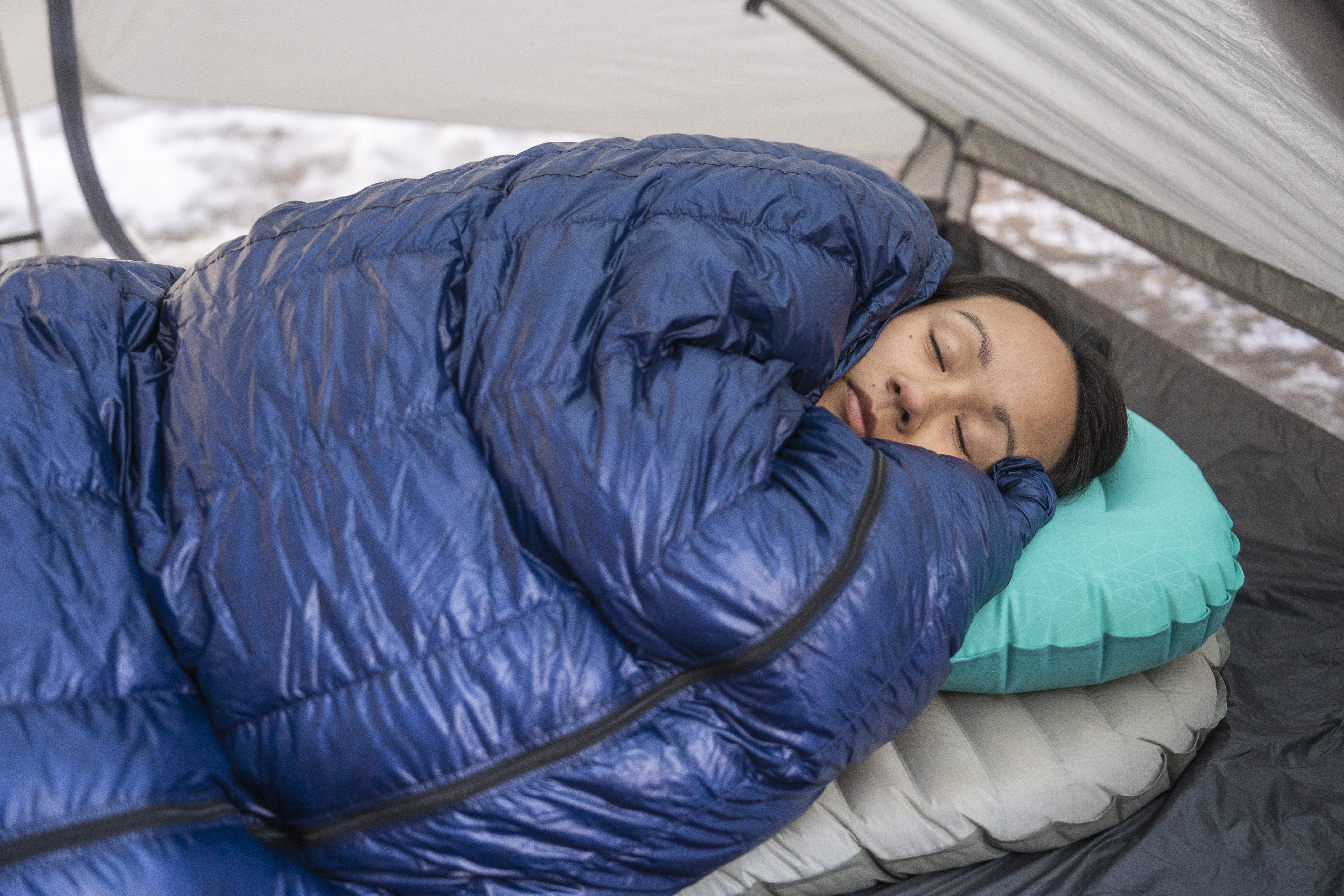
A sleeping bag is a fully enclosed insulation system designed to trap body heat during overnight outdoor trips. Most models include a hood, draft collar, and full-length zipper to seal in warmth and limit cold air exposure. This traditional design surrounds the entire body, but also includes insulation underneath that becomes compressed during sleep, which can reduce efficiency and add unnecessary pack weight.
Because they follow an all-in-one structure, sleeping bags are familiar to many beginner backpackers, but they can feel more restrictive and less adaptable across changing conditions compared to modern sleep systems like quilts.
Common sleeping bag insulation types include:
- Down sleeping bags: Known for compressibility and warmth-to-weight performance
- Synthetic sleeping bags: Perform better in damp conditions and are often more budget friendly
What is a Backpacking Quilt?
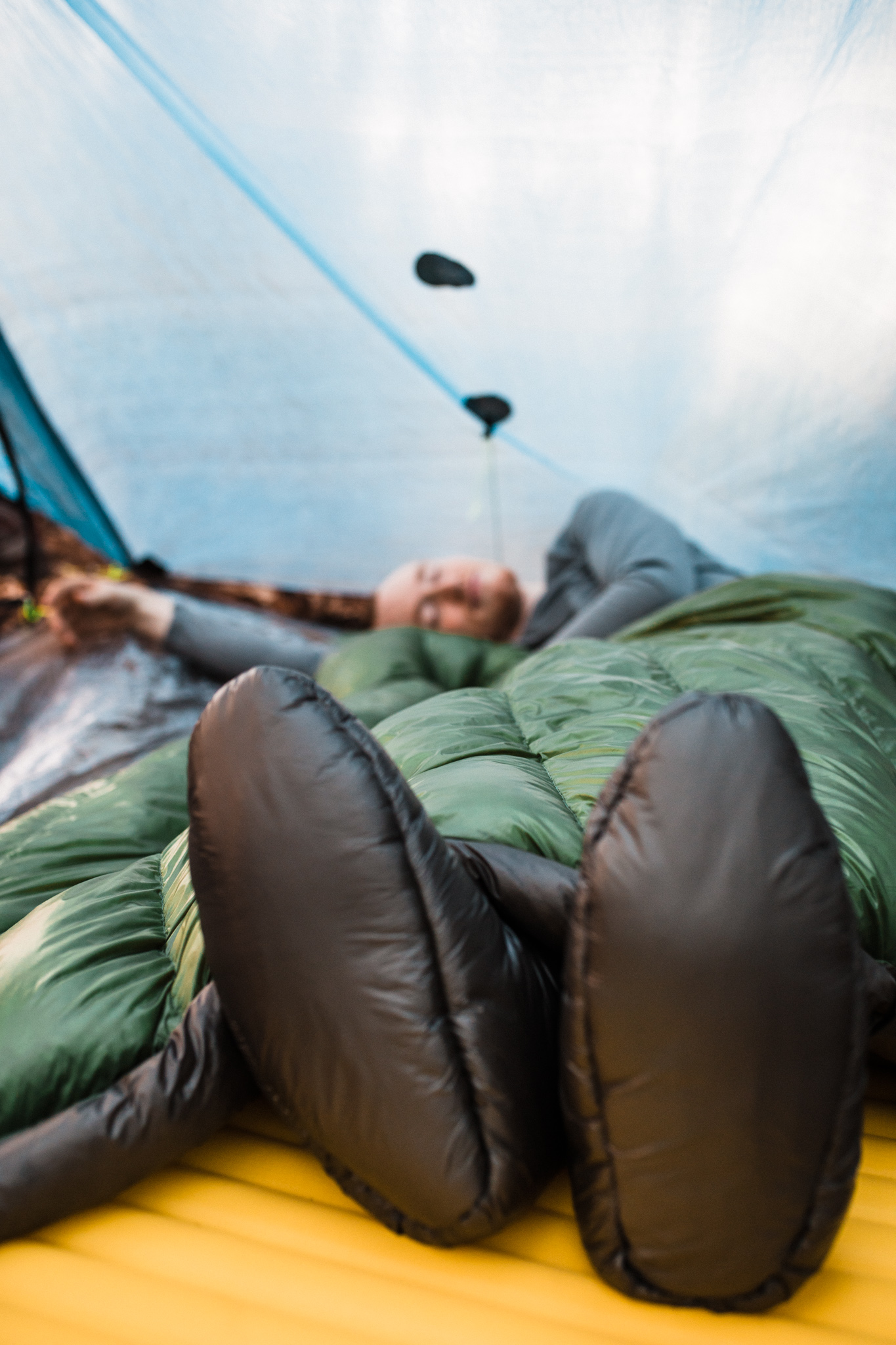
A backpacking quilt is an open-backed sleep system that removes insulation beneath the body. Instead of fully enclosing the sleeper, quilts rely on a sleeping pad to provide ground insulation while trapping body heat from above. This design improves efficiency by eliminating compressed insulation that does not contribute to warmth.
Quilts are available in a wide range of temperature ratings, including options designed for cold weather and winter conditions. Their adaptable design allows hikers to manage warmth through layering, pad insulation, and ventilation, making them a versatile choice across different climates, elevations, and trip types.
Like sleeping bags, quilts are available in different insulation types:
- Down quilts: Valued for compressibility, versatility, and lightweight performance
- Synthetic quilts: Which maintain insulation in humid or wet environments
What Are the Differences Between Quilts and Sleeping Bags?
The main difference between a quilt vs sleeping bag comes down to how each system manages warmth, weight, and adaptability. Sleeping bags use a fully enclosed design to trap heat, while backpacking quilts focus on efficiency by eliminating compressed insulation and allowing for more flexible layering.
Backpacking quilts typically:
- Reduce pack weight by removing unused underside insulation
- Compress smaller for better packability
- Allow adjustable ventilation across changing temperatures
- Provide greater freedom of movement for side sleepers
- Work within modular sleep systems using pads and layered insulation
Sleeping bags often:
- Use a fully enclosed design to surround the body
- Rely on built-in insulation rather than adjustable layering
- Offer a more traditional and familiar sleep setup
Instead of thinking about one option as universally better, most backpackers evaluate their sleep system based on temperature rating, trip length, and personal comfort preferences.
Backpacking Quilt vs Sleeping Bag Features
Weight and Packability
One of the biggest advantages of a backpacking quilt compared to a sleeping bag is reduced pack weight and smaller packed size. Because insulation beneath your body becomes compressed and contributes to heat loss, quilts eliminate this material entirely. This allows manufacturers to use less insulation while still maintaining warmth when paired with an insulated sleeping pad.
For hikers focused on ultralight travel, this can make a noticeable difference. Quilts often compress efficiently into a stuff sack and take up less space in a backpack. Over long distances or multi day routes, these weight savings can improve endurance and overall trail comfort.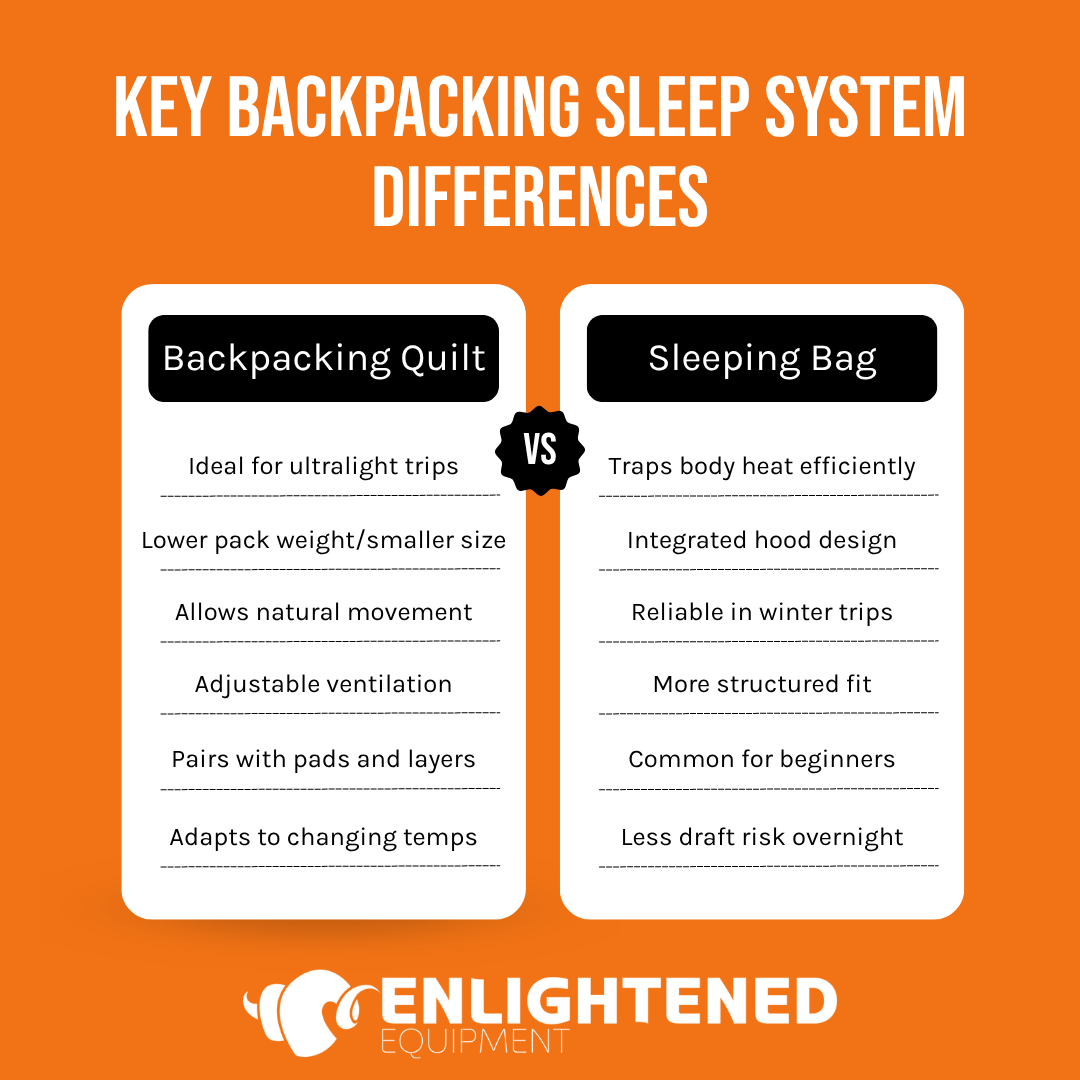
Warmth, Insulation, and Draft Protection
Fully Enclosed Warmth in Sleeping Bags
Sleeping bags maintain an advantage when it comes to fully enclosed insulation and consistent warmth retention. Their design surrounds the body and helps reduce cold air intrusion, which can be especially valuable in colder temperatures or winter camping environments.
Features such as draft collars, insulated hoods, and zipper baffles help trap body heat overnight without requiring frequent adjustment. This simplicity makes sleeping bags a dependable option for hikers who prioritize warmth security over flexibility.
Adjustable Insulation with Backpacking Quilts
Backpacking quilts approach warmth from a more adaptable and weight conscious perspective. Instead of insulating underneath the sleeper, quilts rely on a sleeping pad to provide ground insulation while securing around the body using pad attachment systems.
High quality down quilts with advanced fill power ratings can deliver impressive warmth relative to their weight. Synthetic quilt options also perform well in damp conditions or variable weather, making them useful in environments where moisture management is important.
Comfort, Movement, and Trail Versatility
Freedom of Movement While Sleeping
One of the most noticeable differences between a quilt vs sleeping bag is sleep comfort and mobility. Quilts allow greater freedom of movement since they are not fully enclosed around the body. This makes them appealing for side sleepers or hikers who frequently change positions overnight.
Many backpackers find quilt style sleep systems feel less restrictive and more natural, particularly on longer trips where sleep quality becomes increasingly important.
Adapting to Changing Trail Conditions
Backpacking quilts also perform well across changing temperature conditions. During warm weather or hot nights, hikers can vent excess heat by loosening pad straps or opening the footbox. In cooler environments, layering insulated clothing such as a puffy jacket can help extend warmth without adding additional sleep gear.
This modular sleep system approach allows hikers to fine tune insulation strategies across a wide range of climates and elevations.
Why Thru Hikers Often Choose Quilts
Many thru hikers and long distance backpackers on routes like the Pacific Crest Trail choose quilts to reduce pack weight over thousands of miles. Small gear savings can compound over time, improving endurance and overall trail efficiency during extended trips.
Because thru hikers often face changing temperatures, varied terrain, and continuous mileage, flexible sleep systems become especially valuable. Quilts allow hikers to adapt insulation strategies using layering, ventilation, and sleeping pad adjustments rather than relying on a single fully enclosed system.
For hikers focused on ultralight performance and versatility, quilts have become an increasingly common choice in modern backpacking gear setups.
Situations Where Pack Weight Matters Less
Sleeping bags are often preferred for car camping, winter camping, or short overnight trips where pack weight is not the primary concern. Some hikers also feel more secure inside a traditional sleeping bag when managing body heat in fluctuating conditions.
In harsher environments, pairing a sleeping bag with a bivy sack can add protection from cold air, wind, or moisture.
When a Sleeping Bag May Be the Better Choice
Reliable Warmth in Colder Environments
While quilts offer clear advantages in many scenarios, sleeping bags remain a strong option for trips involving colder temperatures, alpine exposure, or unpredictable weather conditions. Their fully enclosed construction can provide dependable warmth with minimal setup.
Integrated hood systems and full length zipper closures help simplify heat retention, which can be especially beneficial for beginner backpackers or cold sleepers.
How to Choose Between a Camping Quilt and a Sleeping Bag
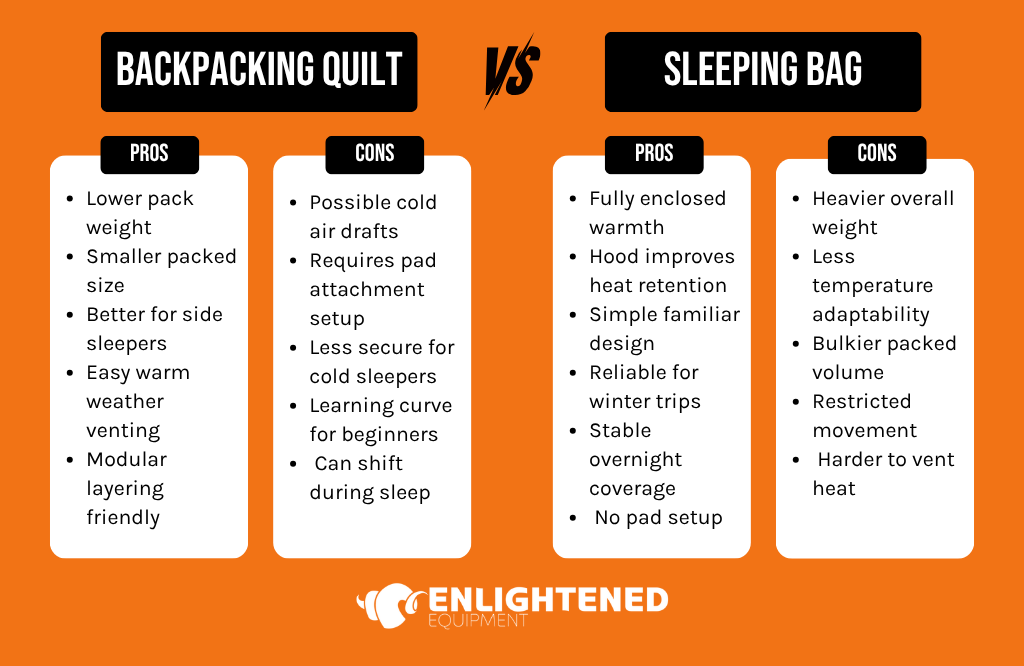
Choosing between a sleeping quilt and a traditional sleeping bag often comes down to understanding the practical tradeoffs in insulation performance, comfort, and versatility.
Adventure in Comfort with Enlightened Equipment Quilts
For hikers who decide that a quilt fits their backpacking style, we build our gear around one goal: giving you the most efficient sleep system possible without sacrificing comfort.
At Enlightened Equipment, we focus on ultralight performance with full customization. You can choose your temperature rating, size, and insulation type so your quilt matches exactly how and where you camp.
Our most popular models, like the Revelation and Enigma, are trusted by long-distance hikers because they deliver reliable warmth, pack down small, and adapt to changing conditions on trail. Whether you’re dialing in your setup for weekend trips or thru-hiking, these quilts are designed to work with you, not against you.
If you’re ready to cut weight and build a more efficient sleep system, explore our down quilt and synthetic quilt collections to find the right fit for your next trip.
Quilt vs Sleeping Bag FAQs
Are backpacking quilts warmer than sleeping bags?
Quilts can perform just as well when paired with proper sleeping pad insulation and layering. Sleeping bags may feel warmer initially due to their enclosed structure.
Do quilts work in cold weather?
Many quilts are designed for freezing temperatures or below. Proper setup and insulation strategy are important.
Are quilts better for side sleepers?
Many side sleepers prefer quilts because they allow easier movement and reduce restriction.
How much pack weight can a quilt save?
Weight savings vary but can range from several ounces to over a pound depending on gear selection.
Do quilts replace sleeping bags completely?
Sleeping bags remain useful for extreme cold, mountaineering, and beginner simplicity.
What temperature rating should I choose?
Choose a rating that accounts for forecasted lows, personal metabolism, and sleeping pad insulation.