The Best Backpacking Quilt: A Complete Buying Guide
The best backpacking quilt for you depends on your sleeping style, expected temperature, and trip conditions. A down backpacking quilt offers the best warmth-to-weight ratio for dry, cold-weather trips. A synthetic insulation quilt handles damp or humid climates better. Most three-season backpackers do well with a 20°F top quilt paired with a properly rated insulated sleeping pad. This guide covers what to look for in a high-quality sleeping quilt and how to match one to how you camp.
Questions to Ask When Buying a Backpacking Quilt
A great backpacking quilt combines the right temperature rating, quality insulation, an effective pad attachment system, and construction details that seal in warmth without adding pack weight. Here are some questions to ask yourself during the buying process.
What temperature rating should I look for in a backpacking quilt?
Match your quilt's temperature rating to the lowest temperature you expect, then subtract 10 to 15°F for buffer. A 20°F backpacking quilt is the most versatile choice for three-season use. A 0°F quilt or 10°F quilt handles winter camping and colder temperatures.
What fill power should I look for in a down backpacking quilt?
Fill power measures how much space one ounce of down fills. Higher fill power (850fp or 950fp) means less down is needed for the same warmth, which reduces overall quilt weight. Both fill powers reach the same temperature rating; higher fill power only changes weight and cost.
Down or synthetic insulation: which is better for a backpacking quilt?
Down offers the best warmth-to-weight ratio and packs the smallest, which is why most ultralight gear uses it. Synthetic insulation performs better in damp conditions and dries faster, which makes it the smarter pick for wet climates or paddling adventures. Synthetic quilts also cost less, which is a strong reason for new backpackers to start there.
What footbox style should I choose in a backpacking quilt?
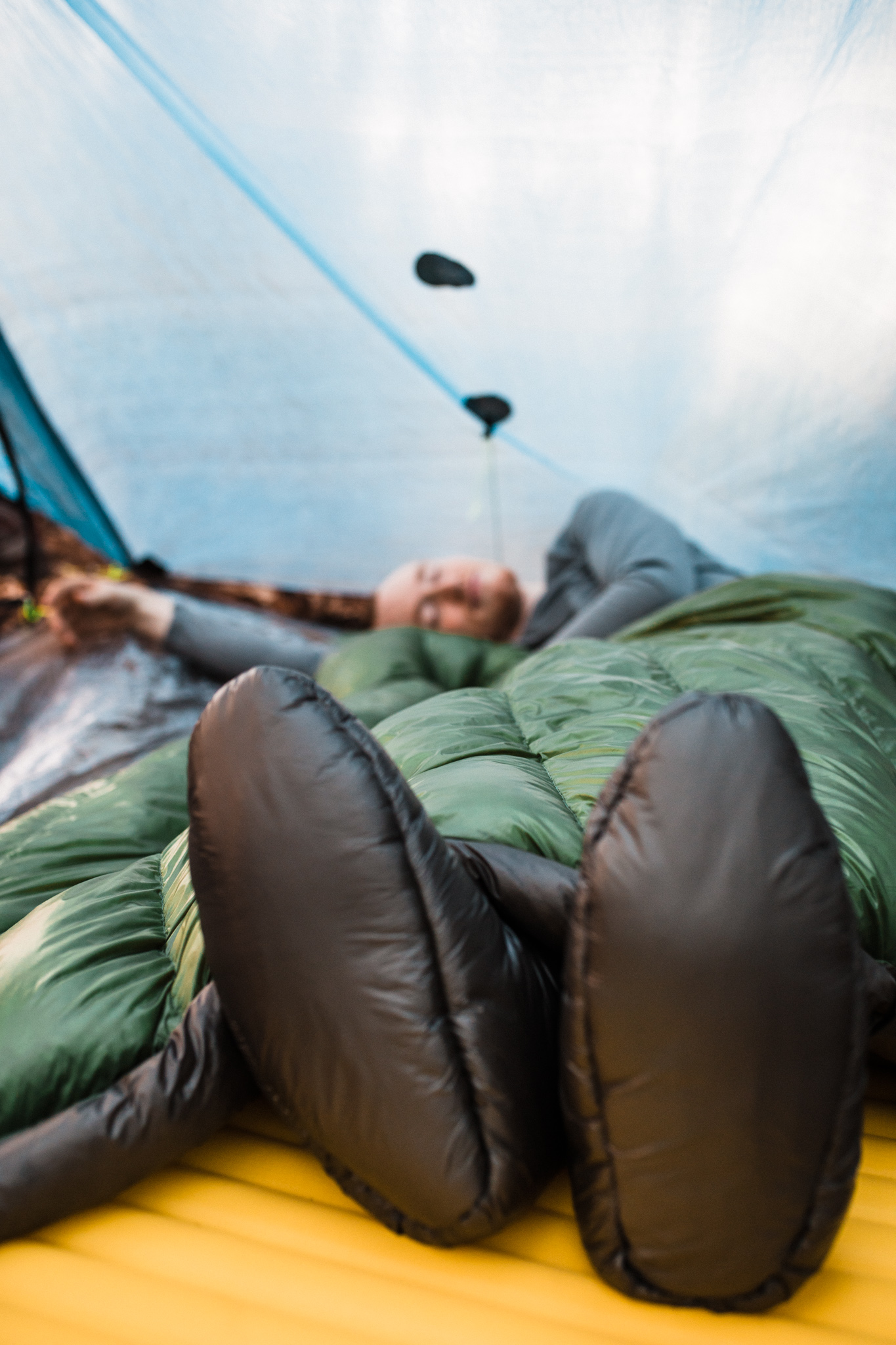
A sewn footbox is warmer, lighter, and simpler, which makes it ideal for cold sleepers or anyone with cold feet. A footbox with a 20-inch zipper and shock cord opens fully into a blanket for warmer weather. A full-length zipper closes the quilt around you like a hoodless sleeping bag on the coldest nights.
What pad attachment system works best on a backpacking quilt?
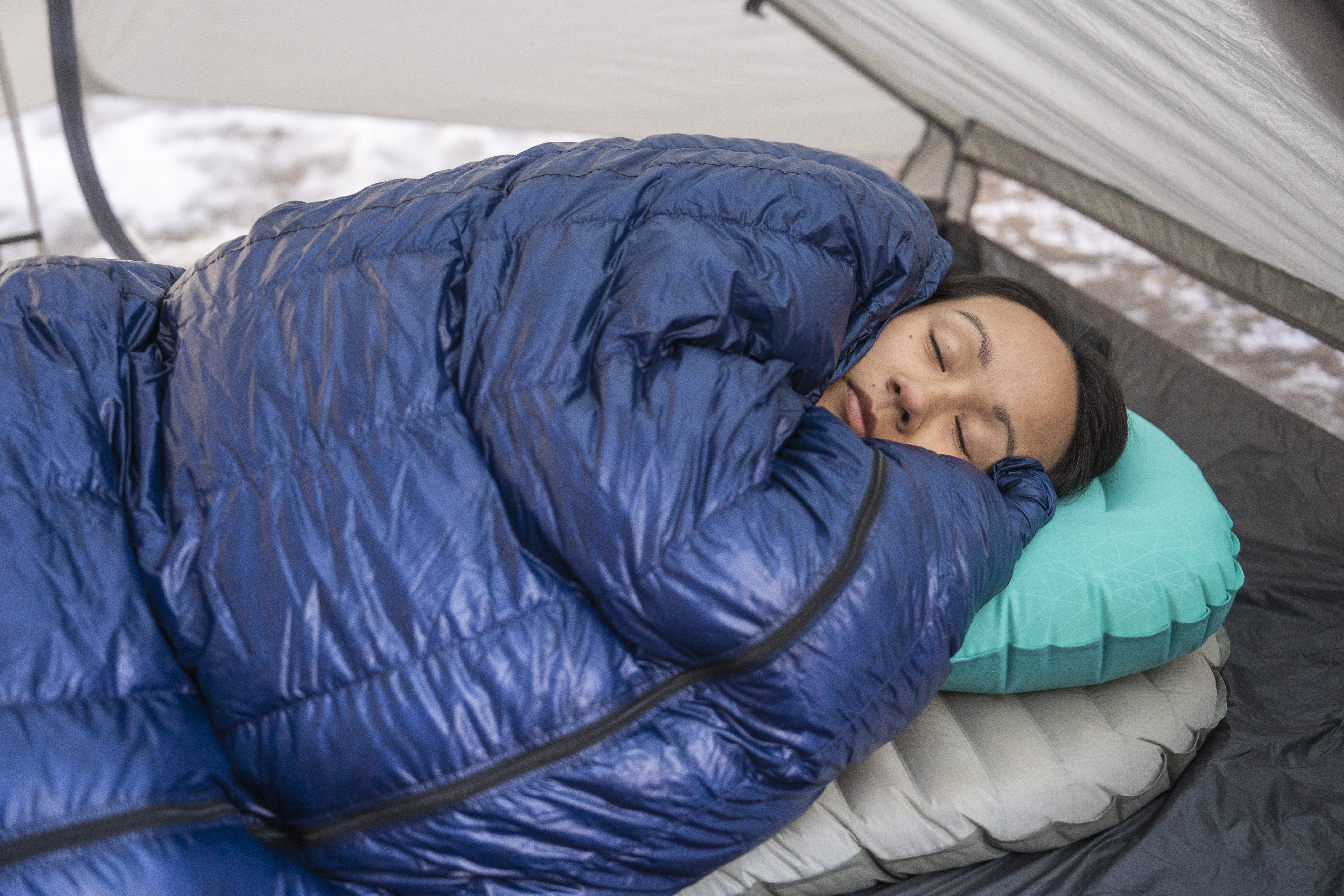
A good pad attachment system uses elastic straps that loop around your insulated sleeping pad and clip to the quilt. This holds the quilt in place as you shift, seals out drafts, and eliminates cold spots along the sides. Some sleeping quilts include both straight and looped straps for flexibility.
What construction features matter in a high-quality backpacking quilt?
A draft collar seals warmth around your neck, and continuous vertical baffles or horizontal baffles keep the heat evenly distributed. A differential cut allows the quilt's insulation to loft fully instead of compressing against the outer shell. Together, these details prevent cold spots and help the quilt hit its rated temperature.
Should I buy a custom or stock backpacking quilt?
Stock quilts ship faster and cost less, which is a smart starting point if you're new to quilts. Custom quilts offer more customization options for temperature rating, size, fabric, color, and features. A regular-length quilt fits most sleepers up to 6 feet tall.
What is a backpacking quilt?
A backpacking quilt is an ultralight quilt built as an alternative to a traditional sleeping bag. It removes the bottom insulation that a sleeping bag compresses under your body and relies on your sleeping pad for ground warmth instead.
How does a backpacking quilt work?
A backpacking quilt drapes over you and attaches to your sleeping pad with straps. Your body seals the top and sides while the pad handles insulation underneath. This design cuts weight without sacrificing warmth as long as your pad has a high enough R-value.
What is the difference between a quilt and a sleeping bag?
A sleeping bag fully encloses you, while a top quilt is open on the bottom and paired with a sleeping pad. Quilts are often 30 to 50% lighter than a comparable sleeping bag at the same temperature rating. Quilts also handle warmer nights better because they open flat like a blanket for ventilation.
Are backpacking quilts warmer than sleeping bags?
At the same temperature rating, a backpacking quilt delivers comparable warmth at less weight. The compressed bottom insulation of a sleeping bag adds little practical warmth, and your sleeping pad's R-value carries the bottom insulation in either system.
Which backpacking quilt is right for you?
The best backpacking quilt for your setup depends on how you sleep and where you camp.
Which backpacking quilt is best for thru-hiking?
The best thru-hiking quilt balances weight, packability, and versatility across changing conditions on trail. A 20°F down top quilt with an adjustable foot box handles most three-season thru-hike temperature ranges without carrying two quilts. Look for a quality stuff sack for compression and a regular-length sleeping quilt for the best fit.
Which backpacking quilt is best for cold sleepers?
Cold sleepers should pick a temperature rating at least 10°F below the lowest temperature they expect. A sewn footbox and a draft collar reduce heat loss on a cold night. Pairing the quilt with an insulated sleeping pad rated R-4 or higher extends real-world warmth in cold weather.
Which backpacking quilt is best for side sleepers?
Side sleepers benefit from a wider quilt that tucks under the body without pulling tight across the shoulders. Vertical baffles reduce down migration when you turn during the night. Sizing up one width helps prevent drafts along the edges.
Which backpacking quilt is best for beginners?
Beginners transitioning from a sleeping bag often prefer a quilt with a full-length zipper, which closes like a hoodless sleeping bag for familiarity. A stock sleeping quilt is also easier to buy than navigating full customization options. A 20°F rating covers the widest range of first trips.
Which backpacking quilt is best for winter camping?
Winter camping calls for a 0°F top quilt, an insulated sleeping pad rated R-5 or higher, and a dedicated head insulation layer. Layering two quilts (a synthetic outer quilt over a down inner quilt) is another way to reach subzero ratings without a single dedicated winter bag. This layered sleep system also gives you three usable temperature ranges from two quilts.
Which backpacking quilt is best for warm-weather backpacking?
A 40°F or 50°F ultralight quilt with a full-length zipper opens flat as a blanket for warmer nights. Warm sleepers especially benefit from the ventilation. Even in warm weather, keep an insulated sleeping pad underneath for ground insulation.
Which backpacking quilt is best for humid or wet climates?
Synthetic insulation outperforms down when damp because it retains warmth and dries faster. A synthetic backpacking quilt is the better pick for humid climates, rainy trips, or paddling adventures. An outer shell with a durable water repellent finish adds extra protection against moisture.
Which backpacking quilt is best for two people?
A two-person backpacking quilt is designed for couples or pairs sharing one quilt to reduce pack weight. Look for a design with individual draft control at the neck so each sleeper can adjust independently. A sewn shared footbox seals in warmth without adding zippers or extra weight.
How do I use a backpacking quilt?
How do I attach a backpacking quilt to my sleeping pad?
Loop the elastic straps around your insulated sleeping pad and clip them to the quilt's side snaps. Tension the straps so the quilt sits snug against your body without pulling tight. Adjust the strap position based on whether you're on your back or side.
What sleeping pad R-value do I need with a backpacking quilt?
Summer trips work with R-2 to R-3. Three-season backpacking needs R-4 or higher. Winter camping calls for R-5 or higher, since the pad does as much work as the quilt in cold weather.
Do I need a hood with a backpacking quilt?
Yes, in some form. Most backpacking quilts do not have a built-in hood, so a hat, hooded jacket, or dedicated sleeping hood is essential on cold nights. Adding head insulation raises a quilt's effective temperature rating by several degrees.
Are backpacking quilts drafty?
A properly sized backpacking quilt with a good pad attachment system is not drafty. Drafts happen when the quilt is too narrow, the straps aren't tensioned, or the draft collar isn't used. Sizing up and cinching the neck closes most gaps.
Where to find the best backpacking quilt for your setup
The best backpacking quilt for your setup is one built with premium insulation, tested temperature ratings, and customization options to match your body and trip style. At Enlightened Equipment, our quilts are handmade in the USA and independently lab-tested for accurate temperature ratings. You can customize temperature rating, size, insulation type, and fabric to build a quilt that fits your sleep system exactly.
Are backpacking quilts worth it?
Yes, especially for backpackers focused on cutting pack weight and improving comfort. A quality quilt delivers the same warmth as a comparable sleeping bag at 30 to 50% less weight.
How long does a backpacking quilt last?
A high-quality down quilt lasts decades with proper care, including uncompressed storage and occasional washing. Synthetic quilts have a shorter usable lifespan but are easier to maintain.
How much does a good backpacking quilt cost?
A quality backpacking quilt typically costs between $250 and $600, depending on temperature rating, fill power, and customization options.
What is the average weight of a backpacking quilt?
A 20°F backpacking quilt in regular length typically weighs between 18 and 24 ounces, depending on fill power and shell fabric.